RINNAI RSC199IP Tankless Water Heater Propane Gas 199K
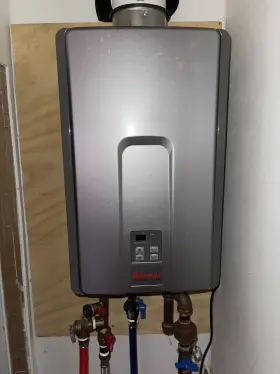
( Brand: Rinnai ), ( Manufacturer Part Number: RSC199IP ), ( Type: Tankless Water Heater/boiler ), ( Power Source: Propane Gas ), ( Heating System: Instantaneous ), ( Voltage: 120 V ), ( Mounting Location: Indoor )
Review RINNAI 99ip Indoor Tankless Water Heater Propane Gas 199k Btu
Introducing the Rinnai RSC199iP Tankless Propane Water Heater, a high-performing and energy-efficient solution for your home's hot water needs. The RSC199iP is part of Rinnai's elite series, offering an impressive 199,000 BTUs input and 160,000 BTUs output, making it suitable for large households or applications requiring extensive hot water usage.
This tankless model is designed for natural and propane gas fuel types, providing the flexibility to cater to various fuel preferences. The condensing technology integrated in this unit ensures higher efficiency levels by extracting more heat from the flue gas. This results in both energy savings and lower operating costs.
The Rinnai RSC199iP water heater features a digital controller with remote access to allow ease of adjusting water temperature, diagnostics, and other preferences from anywhere in the room. Its continuous flow design provides a constant supply of hot water on demand, eliminating the need for a storage tank or extensive recovery time between uses.
Construction-wise, the RSC199iP is engineered with sturdy copper heat exchanger, making it durable and robust. Rinnai also uses a virtually maintenance-free, Non-Catalytic Combbustion system that does not require an annual professional cleaning.
Safety features are an essential aspect of any water heater, and the RSC199iP has coverage on multiple fronts. These include advanced diagnostic codes to ensure early fault detection; overheat protection; and a freeze protection feature suitable for colder climates. Additionally, the unit's draft dip tube promotes efficient combustion and minimizes emissions.
Designed to save space in your home, the compact size of the Rinnai RSC199iP tankless water heater, measuring only 23.8 inches wide by 12 inches high by 28.6 inches deep, can be installed close to a wall for indoor or outdoor usage. Other perks include long vent lengths (between 3-10ft) and tool-free access plates, streamlining installation and maintenance.
As a testament to quality and dependability, Rinnai provides a comprehensive 12-year manufacturer's warranty on the heat exchanger and a limited 5-year warranty for parts. Trust the Rinnai RSC199iP Tankless Propane Water Heater to deliver endless hot water and peace of mind.
RinnRV RSC199iP Propane Tankless Water Heater: A Detailed Analysis
The RinnRV RSC199iP is a popular tankless water heater model that runs on propane gas with a heating capacity of 199,000 BTUs. In this analysis, we will discuss the key advantages and disadvantages of this water heater model to help you make an informed decision.
Advantages:1. On-demand hot water: The RinnRV RSC199iP provides endless hot water as it heats water directly when it is required, unlike traditional tank water heaters that store and heat water continually. This feature results in energy savings as there's no need to keep the stored water at a consistent temperature.
2. Compact design: The tankless design makes the RSC199iP a space-saver compared to tank water heaters, which could be particularly beneficial for those with limited storage space. It also reduces the chances of potential leaks since the unit doesn't store water.
3. Efficient and reliable: The condensing technology of the RinnRV RSC199iP optimizes energy usage as it recaptures and reuses heat that would otherwise be lost during the combustion process. This feature results in a higher energy factor (EF) rating and reduced energy consumption.
4. Quick recovery time: The RSC199iP heats water rapidly due to its impressive BTU rating. This means less waiting time for hot water, especially during peak usage periods.
5. Low-emission: The RinnRV RSC199iP comes with a low nitrous oxide (NOx) emission rating, making it an eco-friendly option that contributes less to greenhouse gas emissions.
Disadvantages:1. Initial investment and installation costs: Although tankless water heaters provide long-term savings and efficiency, their upfront costs can be higher than those of traditional tank water heaters due to the more complex technology involved. Installing the RSC199iP also requires a professional plumber to ensure proper setup for optimal performance.
2. Propane gas requirements: To use this tankless water heater, a propane gas supply is necessary. Property owners without this setup or without constant access to propane might face difficulties installing or operating the unit.
3. Potential flow rate limitations: The RinnRV RSC199iP might not be suitable for homes with high hot water demand, such as those with multiple bathrooms. In such cases, the tankless unit may struggle to meet the demand for hot water, potentially resulting in inconvenient temperature drops.
4. Higher maintenance costs: Although tankless water heaters experience less wear and tear than their traditional counterparts, they still require routine maintenance. The RSC199iP's electronics, sensors, and burners may need occasional replacement, adding extra costs to the overall maintenance budget.
5. Potential cold water sandwiches: Tankless water heaters can sometimes deliver sudden bursts of cold water sandwiched between hot water before reaching a consistent temperature. This condition might be unpleasant for homeowners who expect a continuous hot water stream.
Conclusion:The RinnRV RSC199iP offers numerous advantages like on-demand hot water, space-saving design, efficient performance, quick recovery rates, and low emissions. However, it also comes with disadvantages like high upfront costs, propane gas requirements, potential flow rate limitations, higher maintenance costs, and possible cold water bursts.
Recommendation:If you prioritize energy savings, low standby energy losses, and small footprint, the RinnRV RSC199iP is an excellent choice. However, it's crucial to evaluate whether the unit's advantages align with your specific hot water needs, budget, and available gas supply. For property owners with high hot water demands, large households, or tight budgets, a conventional tank water heater might be a more suitable option. Ultimately, carefully considering your requirements and researching additional tankless water heater models will help you make the best decision for your home.
Details:
Switching over to electric. I got this a few years ago. One person in the house so it did not get heavy use short time I had.
part #: rsc199ip prices
- $403.84-$2250.00
specifications wateheat:
- brand: Rinnai
- mpn: Rsc199ip
- type: Tankless Water Heater/boiler
- power source: Propane Gas
- heating system: Instantaneous
- voltage: 120 V
- mounting location: Indoor
payments wateheat:
- wallet: Google-pay
- other
- credit card: Discover
offer wateheat:
- options: Ship-to-home
- started: November 20, 2024
- sold: 0
- availability: In Stock
- quantity: 1
returns wateheat:
- policy: No Returns
shipping wateheat:
- type: Calculated
- service: UPS Ground Saver
- cost: $69.47
- class: Economy
- transit: 5-12 Days
- carrier: UPS
general wateheat:
- condition: Used
- Heating, Cooling Air > Water Heaters > Tankless Water Heaters
seller wateheat:
- city: Leeds, New York
- # reviews: 582
- rating: 100.0%
Rinnai RSC199IP Is Similar To:
- Rinnai Rl94in Tankless Water Heater Natural Gas (69.6% similar) Rinnai instant tankless water heater, model RL94IN. Turning unit off and on fixes runs fine for a while but then get code 11 again. 9 years old, runs on natural gas, for indoor use. Works but gives intermittent code 11'S. Selling as-is for parts or repair...(May 17th, 2024)
- Rinnai R75lsi R75-lsi Tankless Water Heater Natural Gas 7.5 Gpm 150 Psi Specs In Pics (54.7% similar) Has some signs of use and small surface rust on the top but overall looks good. Rinnai R75-LS tankless water heater natural gas 7.5 GM 150 psi specs in pics condition is used. See pictures for details. Comes with tankless water heater and connections seen in the pictures...(May 17th, 2024)
- Rinnai Ru160in Natural Gas Indoor Tankless Water Heater (65% similar) Part #: Rinnai RU160IN for sale...(May 19th, 2024)
- Rinnai Rur199en Gas Valve Assembly 106000117 (34.9% similar) For Rinnai tankless water heater RUR199EN...(May 20th, 2024)
- Rinnai Mc-91-1us-s Tankless Water Heater Controller (60.3% similar) Rinnai MC-91-1US-S tankless water heater controller used, MC911USS. Water heater control 1X4X2IN 98-140F temp range...(May 20th, 2024)
- Rinnai Dr-7738-501c Tankless Water Heater Dr-7738-501d Fan Assembly U287-1829-cw-2 (53.1% similar) Removed from working RL75I condition as pictured...(May 28th, 2024)
- Rinnai Ru199in Condensing Tankless Hot Water Heater 11 Gpm Natural Gas Indoor Instal (63.1% similar) Used side plates, some of the fasteners are broken, there minor scratches. The boiler is sold only without taps...(June 5th, 2024)
- Rinnai Reu-am1620wd-us-p V53dep Dented Outdoor Tankless Water Heater Propane Gas 120k Btu (74% similar) The Rinnai V53DEP is made in japan and comes with one unit quantity. The unit height is 20 inches, and the width 14 inches. It is a unit type and can be mounted out doors. This compact water heater has a connection location at the bottom and corrosion-resistant feature. The instantaneous...(June 9th, 2024)
- Rinnai Re180in Indoor Tankless Water Heater Natural Gas 180k Btu Scratch dent (73.2% similar) Does not ignite...(June 24th, 2024)
- Rinnai U245-865-3 Twhwor5 Hot Water Outlet With Isolation And Pressure Relief Valves (33.3% similar) With a web stone 600 wog isolation valve. The documentation provided or identification appearing upon this equipment, the equipment described and offered is in no way certified for, recommended for any specific use...(July 3rd, 2024)
- Rinnai 106000084 Gas Pipe Assy Ru80 98 I e Kb (27.3% similar) Made for use with the RU80/98 i/e KB model's. Removed from the working boiler and checked. This Rinnai gas pipe assembly is the perfect addition to your tankless water heater setup...(July 5th, 2024)
